Equipment Maintenance Log Book: Essential Tracking Guide
An equipment maintenance log book is a structured record where you track service dates, repairs, inspections, and usage history for any piece of machinery, tool, vehicle, or device. Whether you maintain a single lawnmower or oversee a fleet of industrial machines, a log book turns scattered notes into a reliable history. It helps you spot patterns, plan ahead, and avoid unexpected breakdowns.
This guide explores how different people use maintenance logs, what to look for when choosing one, and how to decide if a log book matches your own situation.
What an Equipment Maintenance Log Book Actually Does
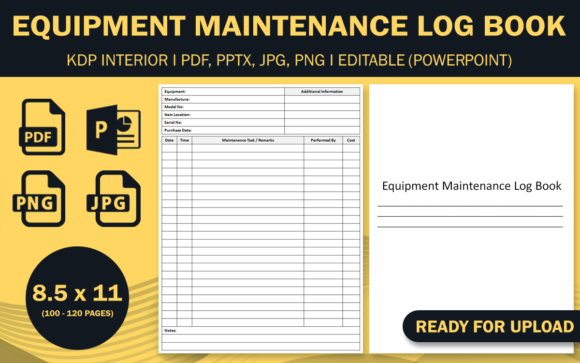
At its core, a maintenance log book is a simple tracking tool. You record the date of each service, what was done, who performed it, and any parts used. Over time, that list becomes a timeline of your equipment's health.
The value lies in consistency. Instead of relying on memory or scattered sticky notes, you have one place to check. That matters whether you run a construction crew or keep a home workshop. A log book turns reactive fixes into planned maintenance, which usually saves money and reduces downtime.
The format you choose matters too. A printable log book, like the one described in this article, gives you full control. You can edit the source file, pick the page count that fits your needs, and print as many copies as you want. That flexibility is hard to beat for anyone who wants a custom solution without starting from scratch.
Beginners Getting Started With Equipment Care
If you are new to maintaining your own tools or vehicles, a log book offers a straightforward way to build good habits. You do not need to know everything upfront. Just write down what you did and when. Over months, you start to see what regular oil changes or filter replacements do for performance.
For a beginner, ease of use is the top priority. A pre-made log book with clear fields—date, task, notes—removes guesswork. You can also print extra pages as you learn more tasks. The PDF interiors in this download let you start with 100 pages and upgrade to 120 later, so you are not locked into a fixed size.
Practical example: A new homeowner buys a riding mower. They use a log book to track oil changes, blade sharpening, and tire pressure checks. After one season, they notice the mower starts easier and cuts cleaner than their neighbor's untreated model. The log book made that difference visible.
Professionals Who Depend on Reliable Equipment
For contractors, mechanics, facility managers, and field service technicians, equipment downtime costs money directly. A maintenance log book becomes a business tool. It documents service history for warranty claims, helps schedule preventive work during slow periods, and proves regular care when selling used equipment.
Professionals often need multiple log books for different equipment types. The editable PowerPoint source file in this download allows you to change headers or add fields specific to your industry. You can create one version for generators and another for compressors, all from the same template.
Reliability and speed matter most here. You do not want to hunt for a pen or flip through loose papers. A well-designed log book with consistent formatting lets you record a service in under two minutes. That speed adds up across a fleet.
Practical example: A plumbing company owner gives each van a printed log book. Technicians record daily mileage, fluid checks, and any repairs. After six months, the owner spots that one van needs brake work every 10,000 miles. He switches to a higher-quality pad, saving future repair costs. The data came straight from the log books.
Creators, Makers, and Hobbyists
Artists, woodworkers, 3D printer enthusiasts, and electronics hobbyists all maintain tools. A laser cutter, CNC router, or pottery kiln requires regular calibration and cleaning. A log book helps you track which settings worked best, when you last replaced a nozzle, or how many hours a machine ran before a belt snapped.
For creators, the long-term usefulness of a log book is high. You might experiment with different materials or techniques. Recording those details alongside maintenance tasks creates a personal knowledge base you can reference years later.
Flexibility matters for this group. You may want to add photos of worn parts or sketch modifications in the margins. The JPG and PNG files in this download let you insert pages into digital notes or print them at custom sizes. The high-resolution interiors also look clean if you want to bind them as a professional portfolio of your machine care.
Practical example: A potter owns an electric kiln. She logs each firing with temperature settings, ramp speed, and any element replacements. After a year, she notices that elements degrade faster when fired above cone 6 repeatedly. She adjusts her schedule and replaces elements preemptively, avoiding a failed firing during a commission.
Business Owners Managing Multiple Assets
Small business owners who manage several pieces of equipment—lawn crews, food trucks, rental gear—need a system that scales. A single log book for each asset keeps records separate and easy to audit. The 100-page and 120-page interior options let you match the book size to the equipment's expected lifespan.
Cost and quality become deciding factors. You do not want to spend hours designing a log book, nor do you want flimsy paper that tears after a few uses. The PDF files in this download are tested on KDP, meaning they print cleanly at scale. You can produce professional-grade log books for your team without hiring a designer.
Commercial value also plays a role. If you rent equipment to customers, a log book shows you followed manufacturer-recommended service intervals. That documentation can protect you in disputes or insurance claims.
Practical example: A small equipment rental company uses 120-page log books bound in softcover. Each piece of gear gets its own book. The clerk records the hours between rentals and the maintenance performed. After two years, they have data showing which brands need fewer repairs. They adjust purchasing decisions accordingly, saving thousands.
Educators and Trainers Teaching Maintenance Skills
Vocational instructors, workshop leaders, and online course creators use log books as teaching tools. A blank log book becomes a hands-on assignment: students fill it out as they service equipment, learning proper documentation habits alongside mechanical skills.
For educators, the learning value of a log book is high. Students see that professional maintenance is not just about fixing things—it is about recording what you did and why. The editable source file allows instructors to simplify fields for beginners or add advanced sections for experienced students.
Presentation matters too. Clean, consistent formatting helps students focus on content, not confusion. The high-resolution interiors in this download print without pixelation, even when enlarged for classroom display.
Practical example: A community college auto shop instructor gives each student a 100-page log book. Over the semester, students log every oil change, brake job, and diagnostic test they perform. At the end, they have a portfolio of work that doubles as a reference for job interviews. The instructor grades both the quality of work and the quality of documentation.
How to Evaluate an Equipment Maintenance Log Book
Choosing the right log book depends on what you value most. Here are the main factors different readers prioritize.
Ease of Use
If you are busy or new to logging, look for clear headings, ample writing space, and a layout that matches your equipment type. The PowerPoint source file lets you adjust column widths or add rows before printing. That means you can tailor the log book to your exact workflow.
Cost and Value
A digital download with multiple file formats gives you unlimited printing for one price. That is hard to beat compared to buying pre-printed books for each piece of gear. You also avoid recurring costs if you need extra pages later.
Quality and Durability
For printed books, paper thickness and binding matter. The PDFs in this download are designed for KDP and similar print services, so you get professional results. If you print at home, use quality paper to match the high-resolution interiors.
Flexibility and Customization
Not all equipment fits a one-size-fits-all template. The inclusion of an editable PowerPoint PPTX file means you can change field names, add logos, or translate headings. Creators and business owners especially benefit from this level of control.
Long-Term Usefulness
A log book with 120 pages covers years of regular service for most equipment. For seasonal tools, a 100-page book may last even longer. Both options provide enough space to build meaningful trends without filling up too fast.
Does an Equipment Maintenance Log Book Fit Your Needs?
Ask yourself these questions to decide:
- How many pieces of equipment do you maintain? One or two? A single log book with multiple tabs may work. Five or more? Dedicated books per machine keep records clearer.
- Do you need to prove maintenance for warranty or resale? Yes? A structured log book with dates and signatures is essential. No? You can use a simpler checklist.
- Do you prefer digital or paper records? The JPG and PNG files let you go either way. Print them for a physical book or import them into note-taking apps for digital tracking.
- How often do you service each piece of equipment? Weekly or monthly? A 100-page book fills quickly. Quarterly or yearly? 120 pages may last a decade.
- Do you need to customize the fields? Yes? The editable PowerPoint file saves you time. No? The pre-made PDFs work as-is.
If you value organization, accountability, and data that helps you make smarter decisions about your tools, a maintenance log book is a practical investment. It works for a single saw or a whole fleet, for a basement hobbyist or a regional contractor.
Making the Most of Your Log Book
Once you have a log book that fits, use it consistently. Write something every time you interact with the equipment, even if it is just a quick inspection. Over months, that habit generates a record that reveals problems early and confirms what is working well.
The download described here gives you multiple formats because people use log books differently. You can edit the PowerPoint to match your branding. You can print the PDFs at home or through a service. You can store the JPGs and PNGs on a tablet for field use. The 100 and 120-page options let you scale up as needed.
Whatever your background—beginner, professional, creator, business owner, educator, or hobbyist—a maintenance log book helps you take control of the equipment you depend on. That control translates into fewer surprises, lower costs, and a clearer picture of how your tools perform over time.