Building a Culture of Appreciation: The Strategic Role of the Employee Award Nomination Form
Recognition is often described as the invisible currency of the workplace. It costs nothing to give, yet its return on morale, retention, and productivity can be immense. But for recognition to feel genuine and fair, it cannot be haphazard. It needs structure, transparency, and a consistent method for capturing contributions. This is where the Employee Award Nomination Form becomes an essential operational tool, not just a piece of paperwork. Far from being a simple administrative step, a well-designed nomination form is the foundation upon which a credible recognition program is built.
Organizations that treat recognition as a casual, word-of-mouth practice often find that the same few people are acknowledged repeatedly, while quieter contributors or those in support roles are overlooked. A formal employee award nomination form eliminates this bias by creating a clear, documented process. It invites anyone—peers, managers, direct reports, or even cross-functional colleagues—to submit a colleague for consideration. This democratization of recognition is one of the most powerful shifts a company can make. When employees see that their input matters and that awards are based on documented evidence rather than favoritism, trust in the recognition system deepens.
Why a Recognition Nomination Template Matters More Than You Think
A recognition nomination template provides more than just a blank space for a name. It guides the nominator through the process of articulating why a person deserves recognition. Without this structure, nominations often devolve into vague statements like "He works hard" or "She is a team player." While these sentiments are positive, they lack the specificity needed to evaluate candidates fairly across different departments or roles.
A strong template prompts the nominator to reflect on concrete behaviors, outcomes, and impact. For example, rather than simply asking for a reason, it might ask: "Describe a specific project or initiative where the nominee exceeded expectations. What was the measurable outcome?" This shifts the focus from personality to performance. It also makes the process easier for the nominator, turning a potentially daunting task into a guided reflection. This is especially valuable in large organizations where managers may oversee dozens of employees and need a reliable method to recall and document exceptional work.
Furthermore, a nomination letter for award that follows a consistent format ensures that every candidate is evaluated using the same criteria. This fairness is critical for maintaining the integrity of the program. When employees believe the process is equitable, they are more likely to engage with it, both as nominators and as nominees. A standardized template also simplifies the review process for committees or HR teams, allowing them to compare submissions side by side without getting lost in varying formats or levels of detail.
Anatomy of an Effective Award Nomination Criteria Template
At the heart of every great nomination form lies a set of well-defined criteria. An award nomination criteria template should be more than a list of qualities; it should reflect the values and strategic priorities of the organization. If your company values innovation, the criteria should include space for describing novel solutions or process improvements. If teamwork is a core value, the form should ask how the nominee contributed to team success or helped others grow.
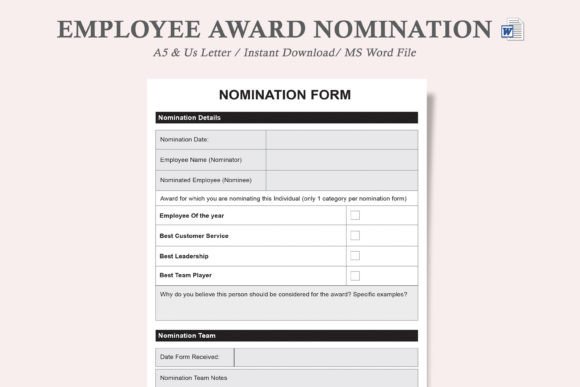
A practical criteria template typically includes several key sections. First, the nominee information—name, department, role, and tenure. Second, the nominator information, including relationship to the nominee. Third, the category or award type, such as "Rising Star," "Innovation Award," "Leadership Excellence," or "Customer Impact." Fourth, and most importantly, the behavioral justification. This section should include guided questions that elicit specific examples. For instance: "What challenge did the nominee face, and how did they address it?" or "How did the nominee's actions align with our company values?"
Finally, a strong template includes space for measurable outcomes. This could be revenue impact, time saved, customer satisfaction scores, or team engagement metrics. Including this element transforms a subjective endorsement into a data-informed case. It also helps the reviewing committee differentiate between strong candidates when multiple people exhibit similar behaviors. An employee appreciation nomination form that captures both qualitative stories and quantitative results strikes the ideal balance between heart and data.
From Paper to Process: How the Workflow Unfolds
Understanding how a nomination moves from form submission to award ceremony helps clarify why each element of the form matters. Typically, the process begins when a nominator downloads or accesses a digital version of the form—whether a PDF, a JPEG for simple printing, or an editable MS Word document. The flexibility to choose between formats (for example, US Letter or A5) allows organizations of any size to adopt the process without friction.
Once completed, the form is submitted to a recognition committee, a manager, or an HR representative. At this stage, the consistency of the template becomes a major asset. Committee members can quickly scan multiple submissions because they all follow the same structure. They can focus on the substance of each nomination rather than struggling to interpret different writing styles or missing information. This efficiency is critical for programs that receive dozens or even hundreds of nominations each quarter.
After evaluation, selected nominees move forward to award approval. The documentation from the nomination for recognition award then serves as the basis for the award announcement. When the organization publicly celebrates the winner, they can pull direct quotes and specific examples from the nomination form. This makes the recognition feel authentic and earned, rather than generic. It also sets a clear example for other employees: specific behaviors lead to recognition, and anyone can achieve it.
The nomination form also provides a valuable archive. Over time, organizations can analyze submission data to identify trends. Which departments are most engaged in recognizing peers? Which award categories receive the most nominations? Are there gaps where certain types of contributions are consistently overlooked? This data-driven insight allows companies to refine their programs and ensure that recognition is distributed evenly and meaningfully across the organization.
Practical Applications Across Different Audiences
The beauty of a well-crafted Employee Recognition Award Nomination Template is its adaptability. For small business owners, the template offers a simple, low-cost way to introduce a formal recognition program without needing complex software. A printed PDF posted in a break room or shared via email can be enough to start the culture shift. For HR professionals in mid-sized or growing companies, the template provides the structure needed to scale recognition efforts as the workforce expands. It ensures consistency even as new managers and teams are added.
For educators and researchers, the concept of structured nomination forms translates easily to academic or grant environments. Recognizing outstanding student assistants, research collaborators, or administrative staff requires the same principles of fairness and documentation. The template can be adapted to highlight contributions like mentorship, grant writing support, or innovative teaching methods. For hobbyists or volunteer organizations, a simplified version of the form can be used to acknowledge contributions at community events or in club settings. The core idea remains universal: clear criteria + specific examples = meaningful recognition.
Even within large enterprises, the template serves a dual purpose. For frontline employees, it gives them a voice in who gets recognized. For senior leaders, it provides a pipeline of stories that illustrate the company culture in action. Annual reports, internal newsletters, and all-hands meetings can draw directly from these nominations to showcase what the organization values. The employee award nomination form thus becomes a living document that connects individual effort to organizational narrative.
Customization Strategies for Maximum Impact
One of the most common mistakes organizations make is adopting a generic template without tailoring it to their context. While a standard recognition nomination template is a great starting point, it should be customized to reflect your specific award types, company values, and workflow. For example, if your organization has a "Safety Champion" award, the criteria section should prompt the nominator to describe specific safety practices or interventions. If you have a "Customer Excellence" award, the form should ask for testimonials or feedback from clients.
Ink-friendly, minimalist designs are ideal for printing, but digital versions can include dropdown menus, character limits, and auto-calculations for scoring. A modern template might include a section where the nominator rates the nominee on a scale for each criterion, alongside a narrative explanation. This hybrid approach gives the review committee both quantitative and qualitative data to work with. The ability to download the form as a digital PDF, edit it in MS Word, or print a clean JPEG version ensures that no matter your technical comfort level, the process remains accessible.
Another powerful customization is to allow peer nominations alongside manager nominations. When the form explicitly invites input from all levels of the organization, it signals that recognition is a shared responsibility. Some companies even create separate but parallel forms for different types of recognition—monthly spotlights versus annual awards—while keeping the core structure consistent. This reduces confusion and makes the program easier to administer as it grows.
Common Pitfalls and How to Avoid Them
Even the best employee appreciation nomination form can fail if the surrounding process is flawed. One common pitfall is lack of awareness. If employees do not know the form exists, or if the nomination window is too short, participation will be low. Communication is key. Promote the form through multiple channels: email, intranet, team meetings, and even physical posters in common areas. Make the deadline visible and send reminders.
Another frequent issue is overly complex language. If the form asks for "comprehensive justification of strategic alignment," many potential nominators will feel intimidated and skip it. Use plain, clear language. Ask questions that anyone can answer: "What did this person do that went above and beyond? How did it help the team or the company?" The goal is to lower the barrier to participation, not raise it.
Finally, avoid the trap of recognizing the same people repeatedly while overlooking hidden contributors. A well-designed template can help with this by including a section on the nominee's prior recognition history, but the real solution is cultural. Encourage nominators to look beyond their immediate circle. Some organizations implement a rule that managers cannot nominate their direct reports more than once per quarter, forcing them to look more broadly at their teams. The template itself is just a tool; the culture around its use determines its effectiveness.
The most successful recognition programs treat the nomination form not as an end in itself, but as the starting point for a ongoing conversation about values, effort, and impact. When employees see that their nominations lead to real outcomes—a thank you from a senior leader, a spotlight in a company newsletter, or a tangible award—they become more engaged in the process. Over time, the act of filling out a nomination form becomes a habit, woven into the fabric of how the organization celebrates its people.
In a world where talent retention and employee engagement are top priorities, the simple act of structured recognition has outsized power. The Employee Award Nomination Form is the mechanism that transforms good intentions into consistent, fair, and impactful recognition. Whether you are a startup founder, an HR director, a team lead, or a volunteer coordinator, investing in a well-designed template—and the process that surrounds it—is one of the smartest investments you can make in your people. The forms themselves may be printed on paper or stored as digital files, but their real value is measured in the stories they capture, the contributions they celebrate, and the culture they help build.